
Beyond Marrakesh: 5 Hidden Gems in the Atlas Mountains You've Never Heard Of
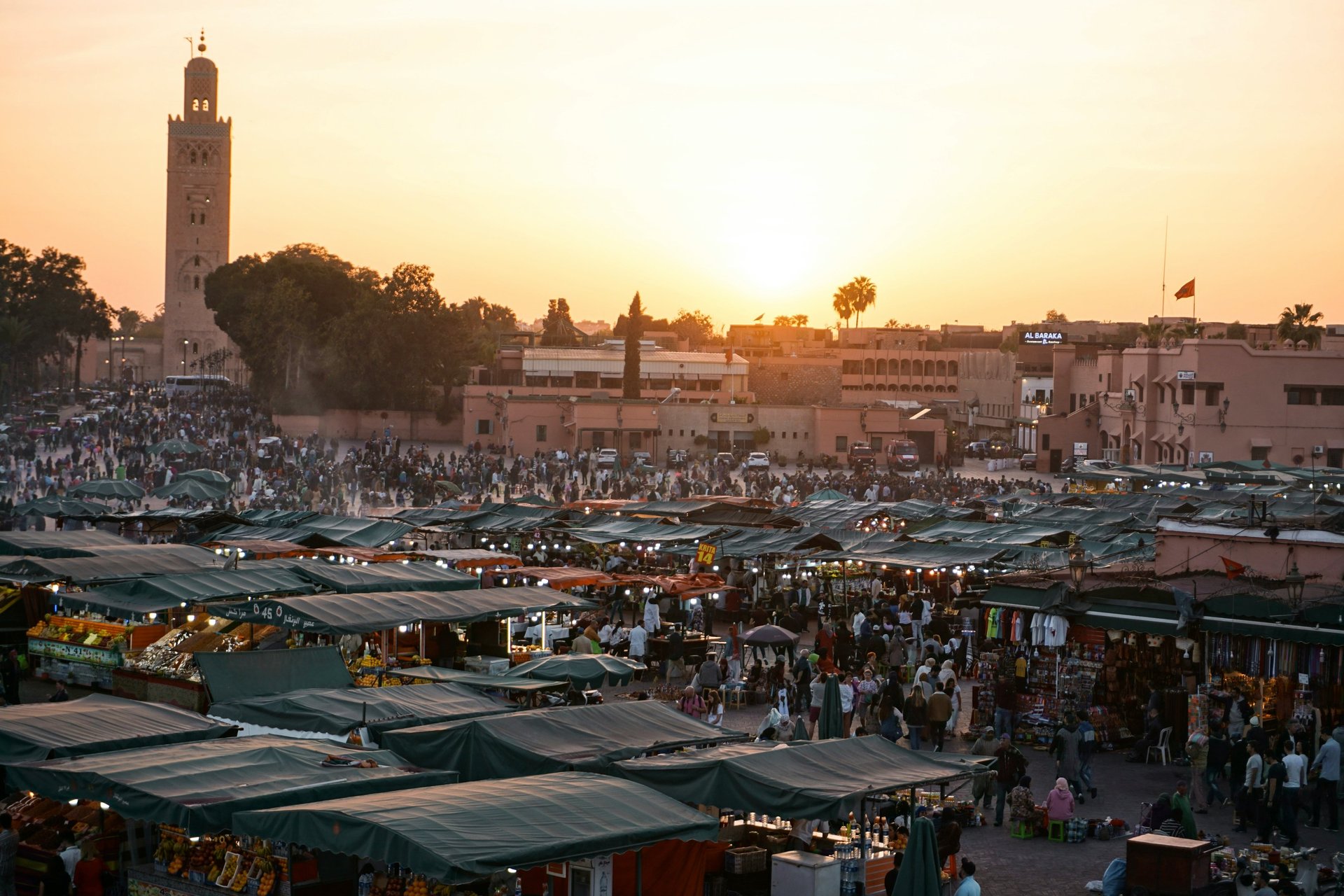
Most visitors to Morocco spend a day or two in the medina, snap a photo at Jemaa el-Fna, and call it an Atlas Mountains adventure. But the real magic? It begins where the tour buses stop.
4/12/20266 min read
The Atlas Mountains stretch more than 2,500 kilometres across Morocco, Algeria, and Tunisia — and within their Moroccan folds hide villages, gorges, and valleys that see a fraction of the tourists who flood Marrakech each year. If you're ready to trade the souvenir stalls for silence, terraced barley fields, and mint tea poured by a Berber grandmother who insists you stay for dinner — this guide is for you.
These are the hidden gems of the Atlas Mountains that even seasoned Morocco travellers rarely discover. We've ranked them not by fame, but by how deeply they rewire your sense of what travel can feel like.
IN THIS ARTICLE
Aït Bouguemez — The Happy Valley
Tizi n'Test Pass & Tin Mal Mosque
Mgoun Valley — The Rose Kingdom
Imilchil & the Lakes of Isli and Tislit
Agouti Village & the Aït Benhaddou Alternatives
Frequently Asked Questions
01 Aït Bouguemez — "The Happy Valley"
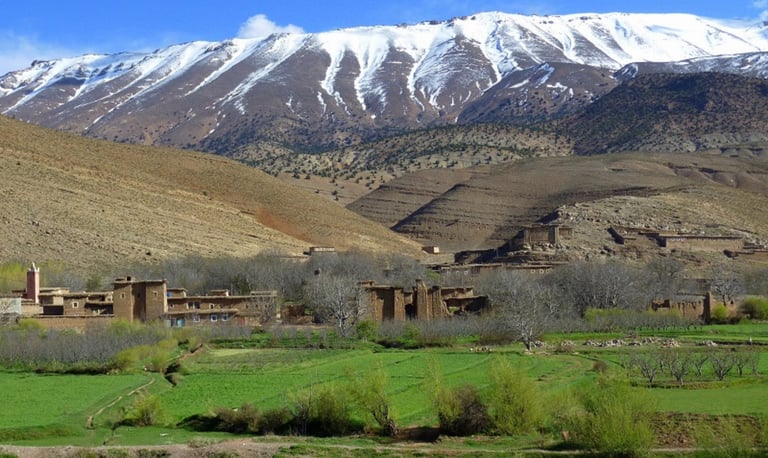
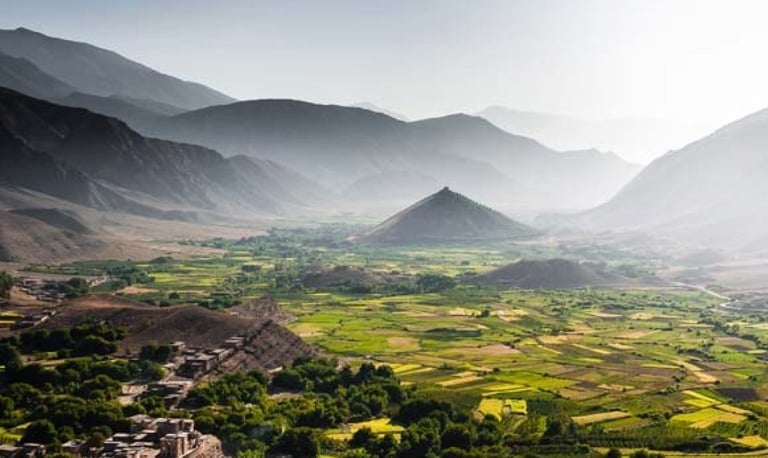
Tucked behind a wall of High Atlas peaks at nearly 2,000 metres, the Aït Bouguemez Valley is perhaps the most photogenic — and least visited — valley in all of Morocco. Locals call it la vallée heureuse, the Happy Valley, and once you arrive, you'll understand why: circular granaries (agadirs) dot terracotta hilltops, walnut trees line irrigation channels, and Amazigh women in colourful striped fouta weave in doorways while speaking a dialect that hasn't changed in centuries.
Unlike the commercialised gorges closer to Marrakesh, Aït Bouguemez rewards slow travellers. Base yourself in the village of Aït Imi or Tabant and spend three or four days walking between the 23 villages that share the valley floor. The M'Goun massif looms at the far end — a reminder that this is also the gateway to serious trekking in the Atlas Mountains.
INSIDER TIP: Stay with a local family gîte rather than a hotel. Families here have been hosting trekkers for decades and the home-cooked tagine with valley-grown produce is worth the trip alone. Ask your host to arrange a mule for luggage if you're continuing south.
02 Tizi n'Test Pass & the Ghost Mosque of Tin Mal
Most travellers cross the Atlas via the busy Tizi n'Tichka pass on their way to Ouarzazate. But head southwest on the P2012 and you'll find the Tizi n'Test — a road so spectacular and so sinuous that locals joke it was designed by a drunken cartographer. At 2,093 metres, the pass offers panoramas that stretch all the way to the Anti-Atlas on clear days.
The real reason to make this journey, however, is the Tin Mal Mosque, one of the few mosques in Morocco open to non-Muslim visitors. Built in 1156 by the Almohad dynasty, this roofless, half-ruined masterpiece sits alone in a narrow river valley, surrounded by mountains and birdsong. The geometric stonework of its arches is so refined that UNESCO has it on its tentative World Heritage list. Read the UNESCO documentation for Tin Mal to understand its full historic significance.
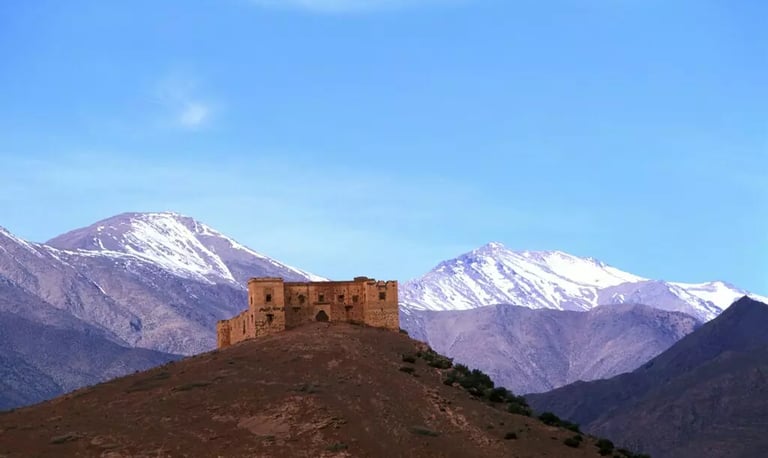
INSIDER TIP: The road is paved but narrow, with hairpin bends and sheer drops. Avoid driving after rain or in winter. The best light for photography hits the mosque facade in the late afternoon — plan to arrive around 3–4pm.
03 Mgoun Valley — The Rose Kingdom
Every spring, the upper reaches of the Dadès and Mgoun valleys transform into a sea of pink. The Damask rose (Rosa × damascena) has been cultivated here since at least the 10th century, and the harvest — which takes place over just three weeks in late April and May — is one of the most sensory experiences in all of North Africa. Rosewater distilleries open their doors, children wade hip-deep through petals, and the entire region smells of rose oil worth more per gram than gold.
But this is also the trailhead for the M'Goun Traverse, the most rewarding multi-day trek in the Moroccan Atlas — more dramatic and far less crowded than the Toubkal circuit. The four-to-seven-day route crosses three passes above 3,000 metres and takes you through gorges so narrow you can touch both walls simultaneously. Gîtes de France Morocco maintains a network of accredited mountain huts along the route.
04 Imilchil & the Twin Lakes of Isli and Tislit
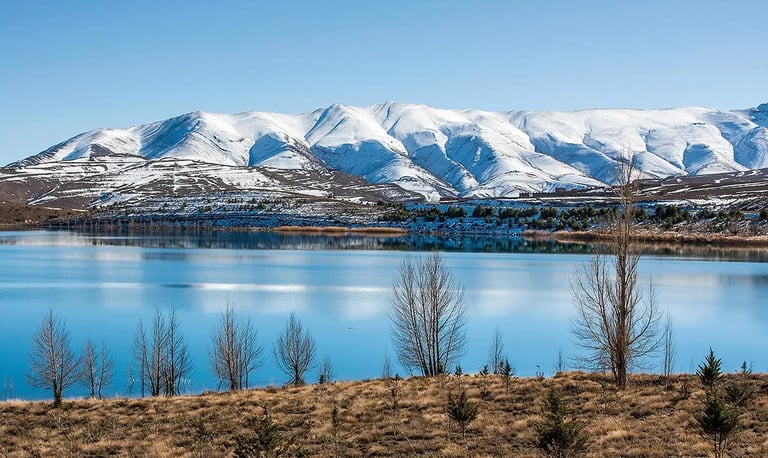
Imilchil sits on a high plateau in the Central Atlas at over 2,200 metres — remote enough that the paved road only arrived relatively recently. The village is encircled by two lakes, Isli and Tislit, which Amazigh legend says were formed from the tears of star-crossed lovers whose families refused to allow their marriage. The lovers cried so much, the story goes, that they each drowned in their own tears — and those lakes are their eternal resting places.
Every September, the Imilchil Marriage Festival (Moussem des Fiançailles)draws Ait Haddidou Berber tribes from across the plateau for three days of music, poetry, and traditional matchmaking ceremonies. It is one of the last authentic tribal festivals in the Atlas and, unlike many Moroccan cultural events, has not yet been packaged for tourists. Lonely Planet's overview of Imilchil gives useful logistical context, but our on-the-ground notes go further.
05 Agouti Village — The Forgotten Kasbah Circuit
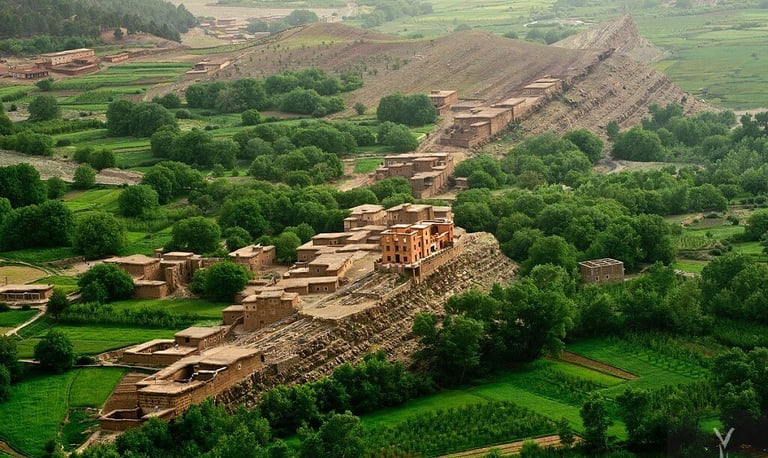
Agouti is a village at the western head of the Aït Bouguemez Valley in Azilal Province — not to be confused with other places of the same name scattered across Morocco. While Tabant is the valley's administrative centre, Agouti is its most atmospheric far end: a compact Amazigh village of mud-brick houses, walnut orchards, and ancient fortified granaries perched on the surrounding hillsides, where the cultivated valley floor gives way to the raw rock of the M'Goun Massif.
This is the classic starting point for the M'Goun Traverse, Morocco's greatest multi-day trek. From Agouti, the trail climbs steeply north through dramatic gorges towards the Tizi n'Tarkeddit pass at 3,450 metres, then onto the summit plateau of Ighil M'Goun (4,071m) — the second-highest peak in Morocco. The full traverse takes four to seven days, ending south of the massif in the Valley of Roses near Kelaat M'Gouna. Unlike the crowded Toubkal circuit, you can walk for entire days here without encountering another foreign trekker.
Even if you're not trekking, Agouti rewards a visit purely for the approach: the drive from Azilal along the single-track mountain road is one of the most dramatic in Morocco, with sheer drops and panoramic ridgeline views long before you reach the valley. For shorter walks, the route up to the Sidi Moussa circular granary above the neighbouring village of Timit takes around 90 minutes return and delivers sweeping views across the entire Happy Valley. Read our full guide to reaching the Aït Bouguemez Valley for transport options from Marrakesh.
Frequently Asked Questions
What is the best time to visit the hidden gems of the Atlas Mountains?
Spring (April–June) and autumn (September–October) are ideal — temperatures are mild, wildflowers bloom, and the high passes are snow-free. Avoid December–February unless you are an experienced winter trekker with proper equipment.
Do I need a 4WD to reach these Atlas Mountain villages?
For Aït Bouguemez/Agouti, Mgoun Valley, and Imilchil, a 4WD or high-clearance vehicle is strongly recommended. The Tizi n'Test route can be driven in a standard car in good conditions, but the road is extremely narrow and challenging regardless of vehicle.
Is the Tin Mal Mosque open to visitors in 2026?
As of early 2026, Tin Mal Mosque has restricted or no visitor access following severe damage from the September 2023 earthquake. Always verify current access with local tourism offices before planning your visit around this site.
Is it safe to travel independently in the Atlas Mountains?
Generally yes — Morocco is one of North Africa's safest countries for independent travellers. For high-altitude trekking, hiring a licensed guide through the Association Nationale des Guides de Montagne is both safer and supports the local economy directly.
Traveler Tips
Atlas Nomads Travel
Mhamid 7, marrakech, morocco 40 000
© atlasnomadstravel
+212 7 66 17 58 99
atlasnomadstravel@gmail.com